Brownstone
Mariners' Museum, Uncurated Search Results
Type: Schooner
Year:
Builder:
Location:

These records are found in the online catalog of The Mariners’ Museum and Park in Newport News, Virginia. Uncurated search results are presented to give researchers and interested readers an idea of whether the museum’s archives contain information about this vessel and whether it may be worthwhile to visit the museum’s catalog search page for further investigation. Uncurated results may be inaccurate or incomplete.
Search mode: Exact Name. Search phrase(s): "Brownstone". Results returned: 17. Results displayed in this table: 17.
Use these buttons to send uncurated search results to your own app or text document for further research. First, check the box for any row, or click "Select All" then uncheck any rows. Then click "Show Selections". You can then copy your selections from the text box and past them into your app.
| Fetch? | Row ID | Media | Date | Vessel | Place | Related Places | Inscription/Marks | Subject | Notes | Archive Number |
|---|---|---|---|---|---|---|---|---|---|---|
| 1 | 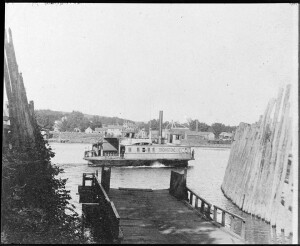 | 1883-1931 | Connecticut River. F/B "Brownstone" 1889? | A photograph of the Brownstone while underway. | MS0091/03.01-07#108 | |||||
| 2 | No image URL. | Brownstone | P0001.011/01-0451 | |||||||
| 3 | 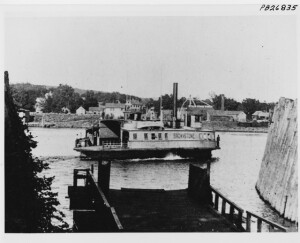 | WRITTEN ON VERSO: BUILT IN 1889, AT PORTLAND CONN. RAN ON THE CONNECTICUT RIVER. RENAMED NEW MARCH. 253T. 82.7 X 24.1 X 8.3 | Ferries | Ferry leaving ferry slip. | P0001.003/01-#PB26835 | |||||
| 4 | No image URL. | Sand Island Lighthouse (Minn.).; Savona (Ship : 1891).; Prussia (Screw steamer : 1868). | Lighthouses–Minnesota. | Sand Island Lighthouse : __memories of two shipwrecks and a brownstone beauty. | LB106296 | |||||
| 5 | No image URL. | Ellis Island Immigration Station (N.Y. and N.J.) | United States–Emigration and immigration–Biography | Immigrants–United States–Biography; Emigration and immigration–Personal narratives | Includes index. | LB86689 | ||||
| 6 | 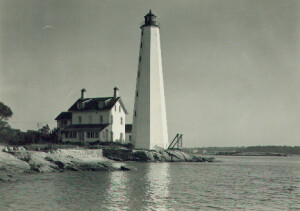 | USA; CONNECTICUT | WRITTEN ON VERSO: NEW LONDON HARBOR LIGHTHOUSE, CONN. | CURATOR NOTES: View of lighthouse and keepers house on waters edge | MS0190/01-1.37#02 | |||||
| 7 | 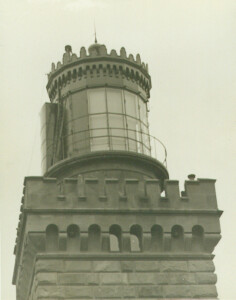 | Navesink Light Station (N.J.). | USA; NEW JERSEY | WRITTEN ON VERSO: NAVESINK LIGHTHOUSE, NEW JERSEY, BUILT 1828, REBUILT 1862, 73 FT. HIGH | CURATOR NOTES: Close up view of top of lighthouse. History of the Navesink Light station “ …for to the Northward off us we saw high hills. This is a very good land to fall with, and a pleasant land to see” —Robert Juet, explorer, 1609 Situated 200 feet above sea level atop the Navesink Highlands, Twin Lights has stood as a sentinel over the treacherous coastal waters of northern New Jersey since 1828. Named Navesink Light station, it became known as the “Twin Lights of Highlands” to those who used its mighty beacons to navigate. As the primary seacoast light for New York Harbor, it was the best and brightest light on the Atlantic Coast for generations of seafarers. Many a life and cargo were saved by the sweep of its beacons. The current lighthouse, built in 1862 of local brownstone, cost $74,000, and replaced the earlier buildings that had fallen into disrepair. Architect Joseph Lederle designed the new structure with two non-identical towers linked by keepers' quarters and storage rooms. This unique design made it easy to distinguish Twin Lights from other nearby lighthouses. At night, the two beacons, one flashing and the other fixed, provided another distinguishing characteristic. With the development of automated lights, offshore light towers, radar, and other sophisticated navigational equipment in the 20th century, manned lighthouses gradually became obsolete. While there are still working lighthouses in the United States, many have been decommissioned—a fate that befell Twin Lights in 1949. After 121 years of service, the most powerful coastal light in America was extinguished. The State of New Jersey acquired Twin Lights from the Borough of Highlands in 1962, and opened it as a museum. Today, visitors can tour the lighthouse, climb the North Tower for a breathtaking view of the Atlantic Ocean, visit the exhibit gallery, and see the 9 foot bivalve lens on display in the generator building. Twin Lights no longer guides ships into New York Harbor, but it stands as a formidable reminder of the important role lighthouses played in the maritime history of this country. Twin Lights is listed on the State and National Registers of Historic Places. | MS0190/01-1.36#09 | ||||
| 8 | 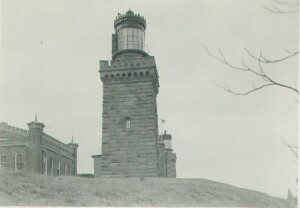 | Navesink Light Station (N.J.). | USA; NEW JERSEY | WRITTEN ON VERSO: NAVESINK LIGHTHOUSE, NEW JERSEY, BUILT 1828, REBUILT 1862, 73 FT. HIGH | CURATOR NOTES: Close up view of lighthouse with building in background to the left. History of the Navesink Light station “ …for to the Northward off us we saw high hills. This is a very good land to fall with, and a pleasant land to see” —Robert Juet, explorer, 1609 Situated 200 feet above sea level atop the Navesink Highlands, Twin Lights has stood as a sentinel over the treacherous coastal waters of northern New Jersey since 1828. Named Navesink, it became known as the “Twin Lights of Highlands” to those who used its mighty beacons to navigate. As the primary seacoast light for New York Harbor, it was the best and brightest light on the Atlantic Coast for generations of seafarers. Many a life and cargo were saved by the sweep of its beacons. The current lighthouse, built in 1862 of local brownstone, cost $74,000, and replaced the earlier buildings that had fallen into disrepair. Architect Joseph Lederle designed the new structure with two non-identical towers linked by keepers' quarters and storage rooms. This unique design made it easy to distinguish Twin Lights from other nearby lighthouses. At night, the two beacons, one flashing and the other fixed, provided another distinguishing characteristic. With the development of automated lights, offshore light towers, radar, and other sophisticated navigational equipment in the 20th century, manned lighthouses gradually became obsolete. While there are still working lighthouses in the United States, many have been decommissioned—a fate that befell Twin Lights in 1949. After 121 years of service, the most powerful coastal light in America was extinguished. The State of New Jersey acquired Twin Lights from the Borough of Highlands in 1962, and opened it as a museum. Today, visitors can tour the lighthouse, climb the North Tower for a breathtaking view of the Atlantic Ocean, visit the exhibit gallery, and see the 9 foot bivalve lens on display in the generator building. Twin Lights no longer guides ships into New York Harbor, but it stands as a formidable reminder of the important role lighthouses played in the maritime history of this country. Twin Lights is listed on the State and National Registers of Historic Places. | MS0190/01-1.36#07 | ||||
| 9 | 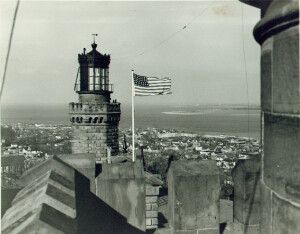 | Navesink Light Station (N.J.). | USA; NEW JERSEY | WRITTEN ON VERSO: NAVESINK LIGHTHOUSE, NEW JERSEY, BUILT 1828, REBUILT 1862, 73 FT. HIGH | CURATOR NOTES: View of lighthouse with distant view of a town in the background and ocean at the towns edge. History of the Navesink Light station “ …for to the Northward off us we saw high hills. This is a very good land to fall with, and a pleasant land to see” —Robert Juet, explorer, 1609 Situated 200 feet above sea level atop the Navesink Highlands, Twin Lights has stood as a sentinel over the treacherous coastal waters of northern New Jersey since 1828. Named Navesink Light station, it became known as the “Twin Lights of Highlands” to those who used its mighty beacons to navigate. As the primary seacoast light for New York Harbor, it was the best and brightest light on the Atlantic Coast for generations of seafarers. Many a life and cargo were saved by the sweep of its beacons. The current lighthouse, built in 1862 of local brownstone, cost $74,000, and replaced the earlier buildings that had fallen into disrepair. Architect Joseph Lederle designed the new structure with two non-identical towers linked by keepers' quarters and storage rooms. This unique design made it easy to distinguish Twin Lights from other nearby lighthouses. At night, the two beacons, one flashing and the other fixed, provided another distinguishing characteristic. With the development of automated lights, offshore light towers, radar, and other sophisticated navigational equipment in the 20th century, manned lighthouses gradually became obsolete. While there are still working lighthouses in the United States, many have been decommissioned—a fate that befell Twin Lights in 1949. After 121 years of service, the most powerful coastal light in America was extinguished. The State of New Jersey acquired Twin Lights from the Borough of Highlands in 1962, and opened it as a museum. Today, visitors can tour the lighthouse, climb the North Tower for a breathtaking view of the Atlantic Ocean, visit the exhibit gallery, and see the 9 foot bivalve lens on display in the generator building. Twin Lights no longer guides ships into New York Harbor, but it stands as a formidable reminder of the important role lighthouses played in the maritime history of this country. Twin Lights is listed on the State and National Registers of Historic Places. | MS0190/01-1.36#10 | ||||
| 10 | 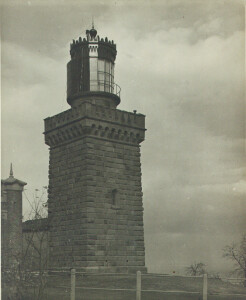 | Navesink Light Station (N.J.). | USA; NEW JERSEY | WRITTEN ON VERSO: NAVESINK LIGHTHOUSE, NEW JERSEY, BUILT 1828, REBUILT 1862, 73 FT. HIGH | CURATOR NOTES: Close up view of lighthouse. History of the Navesink Light station “ …for to the Northward off us we saw high hills. This is a very good land to fall with, and a pleasant land to see” —Robert Juet, explorer, 1609 Situated 200 feet above sea level atop the Navesink Highlands, Twin Lights has stood as a sentinel over the treacherous coastal waters of northern New Jersey since 1828. Named Navesink Light station, it became known as the “Twin Lights of Highlands” to those who used its mighty beacons to navigate. As the primary seacoast light for New York Harbor, it was the best and brightest light on the Atlantic Coast for generations of seafarers. Many a life and cargo were saved by the sweep of its beacons. The current lighthouse, built in 1862 of local brownstone, cost $74,000, and replaced the earlier buildings that had fallen into disrepair. Architect Joseph Lederle designed the new structure with two non-identical towers linked by keepers' quarters and storage rooms. This unique design made it easy to distinguish Twin Lights from other nearby lighthouses. At night, the two beacons, one flashing and the other fixed, provided another distinguishing characteristic. With the development of automated lights, offshore light towers, radar, and other sophisticated navigational equipment in the 20th century, manned lighthouses gradually became obsolete. While there are still working lighthouses in the United States, many have been decommissioned—a fate that befell Twin Lights in 1949. After 121 years of service, the most powerful coastal light in America was extinguished. The State of New Jersey acquired Twin Lights from the Borough of Highlands in 1962, and opened it as a museum. Today, visitors can tour the lighthouse, climb the North Tower for a breathtaking view of the Atlantic Ocean, visit the exhibit gallery, and see the 9 foot bivalve lens on display in the generator building. Twin Lights no longer guides ships into New York Harbor, but it stands as a formidable reminder of the important role lighthouses played in the maritime history of this country. Twin Lights is listed on the State and National Registers of Historic Places. | MS0190/01-1.36#11 | ||||
| 11 | 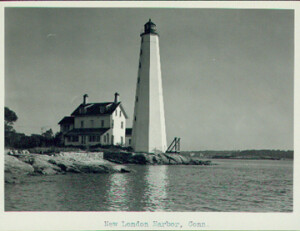 | USA; CONNECTICUT | WRITTEN ON VERSO: NEW LONDON HARBOR LIGHTHOUSE, CONN. | CURATOR NOTES: View of lighthouse and keepers house on shores edge. Description: The town of New London, Connecticut is a veritable paradise for lighthouse lovers. The Coast Guard Academy, which operates a museum featuring a number of exhibits relating to lighthouse history, is found at the north end of town, and at one vantage point on the town’s Pequot Avenue, which runs alongside the Thames River near its entrance from Long Island Sound, it is possible to see five lighthouses (New London Harbor, New London Ledge, Race Rock, Little Gull Island, and Avery Point) at once, if there is no fog. Locally known as the Pequot Avenue Lighthouse to distinguish it from the lighthouse just offshore, the present New London Harbor Lighthouse is Connecticut’s oldest and tallest lighthouse and provides an interesting architectural counterpoint to its much newer and flashier neighbor, the New London Ledge Lighthouse. It’s also a reminder of the glory days early in the country’s history when New London was the third busiest whaling port, behind New Bedford and Nantucket. The busy port also attracted several immigrants, leading to the beach area near where the lighthouse stands being used as quarantine ground in the 1750’s for recent arrivals to the New World infected with smallpox, a recurring problem at the time. In 1760, the colonial legislature of Connecticut passed an act creating a committee to pursue the funding, construction, and staffing of a new lighthouse for the harbor entrance at New London. The following year, thousands of lottery tickets were sold to pay for the lighthouse (a popular method of raising funds for construction projects in those days). The lighthouse, a 64-foot stone tower with a wooden lantern at the top, was finished that same year at the west side of the harbor entrance. It was the first lighthouse in the harbor and only the fourth to be built in the American colonies. By 1800, the New London Lighthouse had a crack extending ten feet down from the lantern. In addition, the light was so dim as to often be indistinguishable from the lights of the surrounding homes, and from the west the beacon was completely obscured by a point of land. Congress allocated funds for a replacement light, and in 1800 a New Londoner by the name of Abisha Woodward began construction on the current octagonal, tapered 80-foot tower. Sitting on a foundation of a mixture of granite, brownstone, and native stone, the tower was built of freestone, hammered smooth and laid in courses. The walls were nine inches thick and lined with brick inside. A wooden spiral staircase led up to the lantern room. Since construction of the tower, various renovations have been affected such as installing a new lantern with a copper dome, repainting the exterior walls with hydraulic cement and whitewash, and replacing the interior stairway. When the new station opened in 1801, its flashing light was produced by oil lamps and an eclipser. This apparatus was replaced in 1834 by eleven lamps with 14-inch reflectors. Finally, a fourth-order Fresnel lens, which remains in the lighthouse today, was installed in the late 1850s. The first keeper’s house deteriorated quickly and was replaced in 1818. The current gable-roofed, 2 ½ story keeper’s residence was built in 1863. During the War of 1812, the New London Harbor Lighthouse was extinguished. The British did not attack the station during the conflict, as it was guarded by colonial troops, but instead invaded the undefended Little Gull Island Light, taking all of its lamps and reflectors. New London was not the first town where landlubbers found themselves at odds with the maritime community. In 1904, the thorn in the town residents’ side was the fog siren newly installed in the New London Harbor Lighthouse. The sizable number of seasonal summer residents was especially dismayed after arriving for their annual period of rest and recuperation from big-city stresses only to have the new fog signal prevent any possibility of a good night’s sleep. While city residents complained about the “horrible groaning and shrieking,” local ship captains found the sound of the long-requested signal to be sweet music to their ears indeed when attempting to navigate the harbor through a typical pea-soup fog. The problem was finally resolved in 1906 when a Daboll trumpet replaced the maligned fog siren. The whole issue became mute in 1911 when the New London Ledge Lighthouse was activated, and the Harbor light’s fog signal was turned off for good. The harbor lighthouse was automated in 1912, and the property, which had been divided in half by the construction of Pequot Avenue in the late 1860s, was auctioned off as two separate parcels. The New London Harbor Lighthouse is not the easiest lighthouse to visit, as the keeper’s house and surrounding ground is privately owned. Limited views are available from the sidewalk on Pequot Avenue, but the best views are from the water. In 2005, the New London Maritime Society became the new legal steward of the New London Harbor Lighthouse, after the Coast Guard excessed the tower through the National Historic Lighthouse Preservation Act of 2000. The tower, however, remains off-limits to the public. References The Lighthouses of Connecticut, Jeremy D’Entremont, 2005. Northeast Lights: Lighthouses and Lightships, Rhode Island to Cape May, New Jersey, Robert Bachand, 1989. Historically Famous Lighthouses, U.S. Coast Guard. | MS0190/01-1.37#06 | |||||
| 12 | 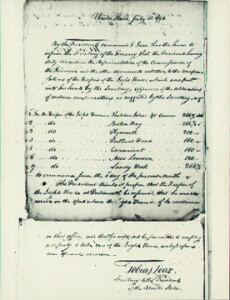 | USA; CONNECTICUT | WRITTEN ON VERSO: NEW LONDON HARBOR LIGHTHOUSE, CONN. | CURATOR NOTES: Letter from Tobas Lear, Secretary of the President of the United States. Description: The town of New London, Connecticut is a veritable paradise for lighthouse lovers. The Coast Guard Academy, which operates a museum featuring a number of exhibits relating to lighthouse history, is found at the north end of town, and at one vantage point on the town’s Pequot Avenue, which runs alongside the Thames River near its entrance from Long Island Sound, it is possible to see five lighthouses (New London Harbor, New London Ledge, Race Rock, Little Gull Island, and Avery Point) at once, if there is no fog. Locally known as the Pequot Avenue Lighthouse to distinguish it from the lighthouse just offshore, the present New London Harbor Lighthouse is Connecticut’s oldest and tallest lighthouse and provides an interesting architectural counterpoint to its much newer and flashier neighbor, the New London Ledge Lighthouse. It’s also a reminder of the glory days early in the country’s history when New London was the third busiest whaling port, behind New Bedford and Nantucket. The busy port also attracted several immigrants, leading to the beach area near where the lighthouse stands being used as quarantine ground in the 1750’s for recent arrivals to the New World infected with smallpox, a recurring problem at the time. In 1760, the colonial legislature of Connecticut passed an act creating a committee to pursue the funding, construction, and staffing of a new lighthouse for the harbor entrance at New London. The following year, thousands of lottery tickets were sold to pay for the lighthouse (a popular method of raising funds for construction projects in those days). The lighthouse, a 64-foot stone tower with a wooden lantern at the top, was finished that same year at the west side of the harbor entrance. It was the first lighthouse in the harbor and only the fourth to be built in the American colonies. By 1800, the New London Lighthouse had a crack extending ten feet down from the lantern. In addition, the light was so dim as to often be indistinguishable from the lights of the surrounding homes, and from the west the beacon was completely obscured by a point of land. Congress allocated funds for a replacement light, and in 1800 a New Londoner by the name of Abisha Woodward began construction on the current octagonal, tapered 80-foot tower. Sitting on a foundation of a mixture of granite, brownstone, and native stone, the tower was built of freestone, hammered smooth and laid in courses. The walls were nine inches thick and lined with brick inside. A wooden spiral staircase led up to the lantern room. Since construction of the tower, various renovations have been affected such as installing a new lantern with a copper dome, repainting the exterior walls with hydraulic cement and whitewash, and replacing the interior stairway. When the new station opened in 1801, its flashing light was produced by oil lamps and an eclipser. This apparatus was replaced in 1834 by eleven lamps with 14-inch reflectors. Finally, a fourth-order Fresnel lens, which remains in the lighthouse today, was installed in the late 1850s. The first keeper’s house deteriorated quickly and was replaced in 1818. The current gable-roofed, 2 ½ story keeper’s residence was built in 1863. During the War of 1812, the New London Harbor Lighthouse was extinguished. The British did not attack the station during the conflict, as it was guarded by colonial troops, but instead invaded the undefended Little Gull Island Light, taking all of its lamps and reflectors. New London was not the first town where landlubbers found themselves at odds with the maritime community. In 1904, the thorn in the town residents’ side was the fog siren newly installed in the New London Harbor Lighthouse. The sizable number of seasonal summer residents was especially dismayed after arriving for their annual period of rest and recuperation from big-city stresses only to have the new fog signal prevent any possibility of a good night’s sleep. While city residents complained about the “horrible groaning and shrieking,” local ship captains found the sound of the long-requested signal to be sweet music to their ears indeed when attempting to navigate the harbor through a typical pea-soup fog. The problem was finally resolved in 1906 when a Daboll trumpet replaced the maligned fog siren. The whole issue became mute in 1911 when the New London Ledge Lighthouse was activated, and the Harbor light’s fog signal was turned off for good. The harbor lighthouse was automated in 1912, and the property, which had been divided in half by the construction of Pequot Avenue in the late 1860s, was auctioned off as two separate parcels. The New London Harbor Lighthouse is not the easiest lighthouse to visit, as the keeper’s house and surrounding ground is privately owned. Limited views are available from the sidewalk on Pequot Avenue, but the best views are from the water. In 2005, the New London Maritime Society became the new legal steward of the New London Harbor Lighthouse, after the Coast Guard excessed the tower through the National Historic Lighthouse Preservation Act of 2000. The tower, however, remains off-limits to the public. References The Lighthouses of Connecticut, Jeremy D’Entremont, 2005. Northeast Lights: Lighthouses and Lightships, Rhode Island to Cape May, New Jersey, Robert Bachand, 1989. Historically Famous Lighthouses, U.S. Coast Guard. | MS0190/01-1.37#04 | |||||
| 13 | 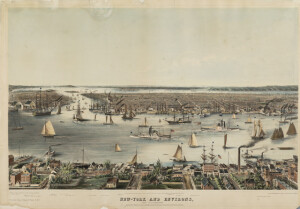 | NOTES: Description of print by Gloria Deak, from Picturing America, pages 376-377: This unusual panorama of the East River waterfront takes in a large part of the city and its surroundings. With its realistic projection and dense reading, it has the look of a photograph. A wide strip of the Brooklyn shore borders the lower margin of the lithograph, with the United States Navy Yard at the old Wallabout in the foreground. The property was first purchased by the federal government in 1801. Across the East River, all of the settled area of Manhattan is included, and if we look beyond the island, across the Hudson, we can see the New Jersey shore. Plying the East River, or docked along the way, are examples of every type of ship in use during the mid-nine-teenth century. There are ferryboats of the uncovered type, the river steamboats C. Vanderbilt and Bay State, a three-masted war vessel, and a large tow boat with a covered deck of the kind used for excursions. We see as well three shipyards. On the Manhattan waterfront, we can make out ferry houses and slips and vessels in drydock. Small sailing craft of various sizes lend a touch of grace. On January 2nd of the year in which this lithograph was issued, the Cunard ship Hibernia left New York Harbor for Boston and Halifax, carrying the mails. It was the first transatlantic steam packet to travel from this port on a regular schedule. At this time, the fashionable neighborhoods in Manhattan were Bond Street, Washington Square, East Broadway, St. John's Park, Second Avenue, and Chelsea. Handsome residences had been built on lower Fifth Avenue, and a small number had reached as far north as Murray Hill. Red-brick residences were being replaced by brownstone, high-stooped structures. The desirable porous stone was quarried in Ulster County, New York, and shipped by barge down the Hudson. An equally large panorama, entitled New York, from Brooklyn Heights was conceived by John William Hill and engraved in aquatint by William James Bennett (entry 463). Both views are, in turn, complemented by Edwin Whitefield's View of Brooklyn, L.1. From U.S. Hotel, New York (entry 548). In Whitefield's lithograph, we look from the opposite side of the East River to inspect the Brooklyn shore. Edgar W. Foreman was an architect and draftsman; his business address was 89 Nassau Street, according to the New York City directory for 1846-1847. As his home was in Williamsburgh (Brooklyn) when he made the drawing for this large lithograph, the view he offers us is one with which he must have been quite familiar. Eliphalet M. Brown Jr., with whom Foreman worked on the East River panorama, is listed as a lithographer at 73 Nassau Street, an address shared by George Hayward, a prominent name in New York lithography. Brown is known for his drawing of the clipper ship Flying Cloud, lithographed by Nathaniel Currier in 1852, and for his portraits on stone of historical personalities. In the Library's collections there are lithographs by Brown of Queen Elizabeth I and of Queen Maria, wife of Louis XV. Impressions of the New York lithograph are owned by the Mariners' Museum in Newport News, Virginia, the Chicago Historical Society, the Museum of the City of New York, the Yale University Art Gallery, the Canadiana Department Collection of the Royal Ontario Museum, Toronto, and the New-York Historical Society. NOTES: The following vessels appear in the print: Catboat SCOUT, New York Pilot Schooner No. 1, PHANTOM, Stonington Line steamboat C. VANDERBILT, 1847-, Bay State Steamboat Company (Fall River Line) steamboat BAY STATE, 1848-1864, Ocean Steam Navigation Co. Steamship, HERMANN, 1847-1869. | CL20048 | |||||||
| 14 | 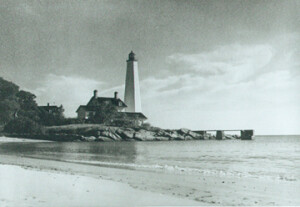 | USA; CONNECTICUT | WRITTEN ON VERSO: NEW LONDON HARBOR LIGHTHOUSE, CONN. | CURATOR NOTES: View of lighthouse and keepers house with shore in foreground. Description: The town of New London, Connecticut is a veritable paradise for lighthouse lovers. The Coast Guard Academy, which operates a museum featuring a number of exhibits relating to lighthouse history, is found at the north end of town, and at one vantage point on the town’s Pequot Avenue, which runs alongside the Thames River near its entrance from Long Island Sound, it is possible to see five lighthouses (New London Harbor, New London Ledge, Race Rock, Little Gull Island, and Avery Point) at once, if there is no fog. Locally known as the Pequot Avenue Lighthouse to distinguish it from the lighthouse just offshore, the present New London Harbor Lighthouse is Connecticut’s oldest and tallest lighthouse and provides an interesting architectural counterpoint to its much newer and flashier neighbor, the New London Ledge Lighthouse. It’s also a reminder of the glory days early in the country’s history when New London was the third busiest whaling port, behind New Bedford and Nantucket. The busy port also attracted several immigrants, leading to the beach area near where the lighthouse stands being used as quarantine ground in the 1750’s for recent arrivals to the New World infected with smallpox, a recurring problem at the time. In 1760, the colonial legislature of Connecticut passed an act creating a committee to pursue the funding, construction, and staffing of a new lighthouse for the harbor entrance at New London. The following year, thousands of lottery tickets were sold to pay for the lighthouse (a popular method of raising funds for construction projects in those days). The lighthouse, a 64-foot stone tower with a wooden lantern at the top, was finished that same year at the west side of the harbor entrance. It was the first lighthouse in the harbor and only the fourth to be built in the American colonies. By 1800, the New London Lighthouse had a crack extending ten feet down from the lantern. In addition, the light was so dim as to often be indistinguishable from the lights of the surrounding homes, and from the west the beacon was completely obscured by a point of land. Congress allocated funds for a replacement light, and in 1800 a New Londoner by the name of Abisha Woodward began construction on the current octagonal, tapered 80-foot tower. Sitting on a foundation of a mixture of granite, brownstone, and native stone, the tower was built of freestone, hammered smooth and laid in courses. The walls were nine inches thick and lined with brick inside. A wooden spiral staircase led up to the lantern room. Since construction of the tower, various renovations have been affected such as installing a new lantern with a copper dome, repainting the exterior walls with hydraulic cement and whitewash, and replacing the interior stairway. When the new station opened in 1801, its flashing light was produced by oil lamps and an eclipser. This apparatus was replaced in 1834 by eleven lamps with 14-inch reflectors. Finally, a fourth-order Fresnel lens, which remains in the lighthouse today, was installed in the late 1850s. The first keeper’s house deteriorated quickly and was replaced in 1818. The current gable-roofed, 2 ½ story keeper’s residence was built in 1863. During the War of 1812, the New London Harbor Lighthouse was extinguished. The British did not attack the station during the conflict, as it was guarded by colonial troops, but instead invaded the undefended Little Gull Island Light, taking all of its lamps and reflectors. New London was not the first town where landlubbers found themselves at odds with the maritime community. In 1904, the thorn in the town residents’ side was the fog siren newly installed in the New London Harbor Lighthouse. The sizable number of seasonal summer residents was especially dismayed after arriving for their annual period of rest and recuperation from big-city stresses only to have the new fog signal prevent any possibility of a good night’s sleep. While city residents complained about the “horrible groaning and shrieking,” local ship captains found the sound of the long-requested signal to be sweet music to their ears indeed when attempting to navigate the harbor through a typical pea-soup fog. The problem was finally resolved in 1906 when a Daboll trumpet replaced the maligned fog siren. The whole issue became mute in 1911 when the New London Ledge Lighthouse was activated, and the Harbor light’s fog signal was turned off for good. The harbor lighthouse was automated in 1912, and the property, which had been divided in half by the construction of Pequot Avenue in the late 1860s, was auctioned off as two separate parcels. The New London Harbor Lighthouse is not the easiest lighthouse to visit, as the keeper’s house and surrounding ground is privately owned. Limited views are available from the sidewalk on Pequot Avenue, but the best views are from the water. In 2005, the New London Maritime Society became the new legal steward of the New London Harbor Lighthouse, after the Coast Guard excessed the tower through the National Historic Lighthouse Preservation Act of 2000. The tower, however, remains off-limits to the public. References The Lighthouses of Connecticut, Jeremy D’Entremont, 2005. Northeast Lights: Lighthouses and Lightships, Rhode Island to Cape May, New Jersey, Robert Bachand, 1989. Historically Famous Lighthouses, U.S. Coast Guard. | MS0190/01-1.37#05 | |||||
| 15 | 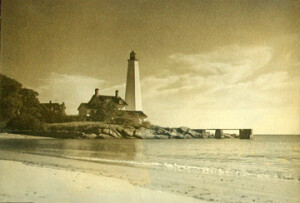 | USA; CONNECTICUT | WRITTEN ON VERSO: NEW LONDON HARBOR LIGHTHOUSE, CONN. | CURATOR NOTES: View of lighthouse and keepers house with shore in foreground. Description: The town of New London, Connecticut is a veritable paradise for lighthouse lovers. The Coast Guard Academy, which operates a museum featuring a number of exhibits relating to lighthouse history, is found at the north end of town, and at one vantage point on the town’s Pequot Avenue, which runs alongside the Thames River near its entrance from Long Island Sound, it is possible to see five lighthouses (New London Harbor, New London Ledge, Race Rock, Little Gull Island, and Avery Point) at once, if there is no fog. Locally known as the Pequot Avenue Lighthouse to distinguish it from the lighthouse just offshore, the present New London Harbor Lighthouse is Connecticut’s oldest and tallest lighthouse and provides an interesting architectural counterpoint to its much newer and flashier neighbor, the New London Ledge Lighthouse. It’s also a reminder of the glory days early in the country’s history when New London was the third busiest whaling port, behind New Bedford and Nantucket. The busy port also attracted several immigrants, leading to the beach area near where the lighthouse stands being used as quarantine ground in the 1750’s for recent arrivals to the New World infected with smallpox, a recurring problem at the time. In 1760, the colonial legislature of Connecticut passed an act creating a committee to pursue the funding, construction, and staffing of a new lighthouse for the harbor entrance at New London. The following year, thousands of lottery tickets were sold to pay for the lighthouse (a popular method of raising funds for construction projects in those days). The lighthouse, a 64-foot stone tower with a wooden lantern at the top, was finished that same year at the west side of the harbor entrance. It was the first lighthouse in the harbor and only the fourth to be built in the American colonies. By 1800, the New London Lighthouse had a crack extending ten feet down from the lantern. In addition, the light was so dim as to often be indistinguishable from the lights of the surrounding homes, and from the west the beacon was completely obscured by a point of land. Congress allocated funds for a replacement light, and in 1800 a New Londoner by the name of Abisha Woodward began construction on the current octagonal, tapered 80-foot tower. Sitting on a foundation of a mixture of granite, brownstone, and native stone, the tower was built of freestone, hammered smooth and laid in courses. The walls were nine inches thick and lined with brick inside. A wooden spiral staircase led up to the lantern room. Since construction of the tower, various renovations have been affected such as installing a new lantern with a copper dome, repainting the exterior walls with hydraulic cement and whitewash, and replacing the interior stairway. When the new station opened in 1801, its flashing light was produced by oil lamps and an eclipser. This apparatus was replaced in 1834 by eleven lamps with 14-inch reflectors. Finally, a fourth-order Fresnel lens, which remains in the lighthouse today, was installed in the late 1850s. The first keeper’s house deteriorated quickly and was replaced in 1818. The current gable-roofed, 2 ½ story keeper’s residence was built in 1863. During the War of 1812, the New London Harbor Lighthouse was extinguished. The British did not attack the station during the conflict, as it was guarded by colonial troops, but instead invaded the undefended Little Gull Island Light, taking all of its lamps and reflectors. New London was not the first town where landlubbers found themselves at odds with the maritime community. In 1904, the thorn in the town residents’ side was the fog siren newly installed in the New London Harbor Lighthouse. The sizable number of seasonal summer residents was especially dismayed after arriving for their annual period of rest and recuperation from big-city stresses only to have the new fog signal prevent any possibility of a good night’s sleep. While city residents complained about the “horrible groaning and shrieking,” local ship captains found the sound of the long-requested signal to be sweet music to their ears indeed when attempting to navigate the harbor through a typical pea-soup fog. The problem was finally resolved in 1906 when a Daboll trumpet replaced the maligned fog siren. The whole issue became mute in 1911 when the New London Ledge Lighthouse was activated, and the Harbor light’s fog signal was turned off for good. The harbor lighthouse was automated in 1912, and the property, which had been divided in half by the construction of Pequot Avenue in the late 1860s, was auctioned off as two separate parcels. The New London Harbor Lighthouse is not the easiest lighthouse to visit, as the keeper’s house and surrounding ground is privately owned. Limited views are available from the sidewalk on Pequot Avenue, but the best views are from the water. In 2005, the New London Maritime Society became the new legal steward of the New London Harbor Lighthouse, after the Coast Guard excessed the tower through the National Historic Lighthouse Preservation Act of 2000. The tower, however, remains off-limits to the public. References The Lighthouses of Connecticut, Jeremy D’Entremont, 2005. Northeast Lights: Lighthouses and Lightships, Rhode Island to Cape May, New Jersey, Robert Bachand, 1989. Historically Famous Lighthouses, U.S. Coast Guard. | MS0190/01-1.37#07 | |||||
| 16 | 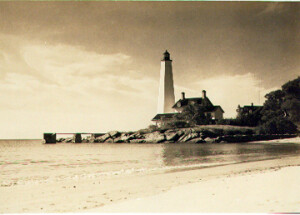 | USA; CONNECTICUT | WRITTEN ON VERSO: NEW LONDON HARBOR LIGHTHOUSE, CONN., BUILT 1760, REBUILT 1801, 90 FT. HIGH | CURATOR NOTES: Distant view of lighthouse and keepers house on waters edge with shore in foreground. Description: The town of New London, Connecticut is a veritable paradise for lighthouse lovers. The Coast Guard Academy, which operates a museum featuring a number of exhibits relating to lighthouse history, is found at the north end of town, and at one vantage point on the town’s Pequot Avenue, which runs alongside the Thames River near its entrance from Long Island Sound, it is possible to see five lighthouses (New London Harbor, New London Ledge, Race Rock, Little Gull Island, and Avery Point) at once, if there is no fog. Locally known as the Pequot Avenue Lighthouse to distinguish it from the lighthouse just offshore, the present New London Harbor Lighthouse is Connecticut’s oldest and tallest lighthouse and provides an interesting architectural counterpoint to its much newer and flashier neighbor, the New London Ledge Lighthouse. It’s also a reminder of the glory days early in the country’s history when New London was the third busiest whaling port, behind New Bedford and Nantucket. The busy port also attracted several immigrants, leading to the beach area near where the lighthouse stands being used as quarantine ground in the 1750’s for recent arrivals to the New World infected with smallpox, a recurring problem at the time. In 1760, the colonial legislature of Connecticut passed an act creating a committee to pursue the funding, construction, and staffing of a new lighthouse for the harbor entrance at New London. The following year, thousands of lottery tickets were sold to pay for the lighthouse (a popular method of raising funds for construction projects in those days). The lighthouse, a 64-foot stone tower with a wooden lantern at the top, was finished that same year at the west side of the harbor entrance. It was the first lighthouse in the harbor and only the fourth to be built in the American colonies. By 1800, the New London Lighthouse had a crack extending ten feet down from the lantern. In addition, the light was so dim as to often be indistinguishable from the lights of the surrounding homes, and from the west the beacon was completely obscured by a point of land. Congress allocated funds for a replacement light, and in 1800 a New Londoner by the name of Abisha Woodward began construction on the current octagonal, tapered 80-foot tower. Sitting on a foundation of a mixture of granite, brownstone, and native stone, the tower was built of freestone, hammered smooth and laid in courses. The walls were nine inches thick and lined with brick inside. A wooden spiral staircase led up to the lantern room. Since construction of the tower, various renovations have been affected such as installing a new lantern with a copper dome, repainting the exterior walls with hydraulic cement and whitewash, and replacing the interior stairway. When the new station opened in 1801, its flashing light was produced by oil lamps and an eclipser. This apparatus was replaced in 1834 by eleven lamps with 14-inch reflectors. Finally, a fourth-order Fresnel lens, which remains in the lighthouse today, was installed in the late 1850s. The first keeper’s house deteriorated quickly and was replaced in 1818. The current gable-roofed, 2 ½ story keeper’s residence was built in 1863. During the War of 1812, the New London Harbor Lighthouse was extinguished. The British did not attack the station during the conflict, as it was guarded by colonial troops, but instead invaded the undefended Little Gull Island Light, taking all of its lamps and reflectors. New London was not the first town where landlubbers found themselves at odds with the maritime community. In 1904, the thorn in the town residents’ side was the fog siren newly installed in the New London Harbor Lighthouse. The sizable number of seasonal summer residents was especially dismayed after arriving for their annual period of rest and recuperation from big-city stresses only to have the new fog signal prevent any possibility of a good night’s sleep. While city residents complained about the “horrible groaning and shrieking,” local ship captains found the sound of the long-requested signal to be sweet music to their ears indeed when attempting to navigate the harbor through a typical pea-soup fog. The problem was finally resolved in 1906 when a Daboll trumpet replaced the maligned fog siren. The whole issue became mute in 1911 when the New London Ledge Lighthouse was activated, and the Harbor light’s fog signal was turned off for good. The harbor lighthouse was automated in 1912, and the property, which had been divided in half by the construction of Pequot Avenue in the late 1860s, was auctioned off as two separate parcels. The New London Harbor Lighthouse is not the easiest lighthouse to visit, as the keeper’s house and surrounding ground is privately owned. Limited views are available from the sidewalk on Pequot Avenue, but the best views are from the water. In 2005, the New London Maritime Society became the new legal steward of the New London Harbor Lighthouse, after the Coast Guard excessed the tower through the National Historic Lighthouse Preservation Act of 2000. The tower, however, remains off-limits to the public. References The Lighthouses of Connecticut, Jeremy D’Entremont, 2005. Northeast Lights: Lighthouses and Lightships, Rhode Island to Cape May, New Jersey, Robert Bachand, 1989. Historically Famous Lighthouses, U.S. Coast Guard. | MS0190/01-1.37#03 | |||||
| 17 | 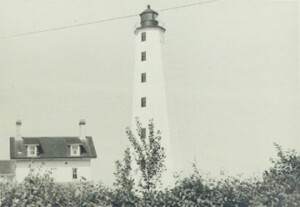 | USA; CONNECTICUT | WRITTEN ON VERSO: NEW LONDON HARBOR LIGHTHOUSE, CONN. | CURATOR NOTES:View of keepers house and lighthouse with tree tops along the bottom of the photograph. Description: The town of New London, Connecticut is a veritable paradise for lighthouse lovers. The Coast Guard Academy, which operates a museum featuring a number of exhibits relating to lighthouse history, is found at the north end of town, and at one vantage point on the town’s Pequot Avenue, which runs alongside the Thames River near its entrance from Long Island Sound, it is possible to see five lighthouses (New London Harbor, New London Ledge, Race Rock, Little Gull Island, and Avery Point) at once, if there is no fog. Locally known as the Pequot Avenue Lighthouse to distinguish it from the lighthouse just offshore, the present New London Harbor Lighthouse is Connecticut’s oldest and tallest lighthouse and provides an interesting architectural counterpoint to its much newer and flashier neighbor, the New London Ledge Lighthouse. It’s also a reminder of the glory days early in the country’s history when New London was the third busiest whaling port, behind New Bedford and Nantucket. The busy port also attracted several immigrants, leading to the beach area near where the lighthouse stands being used as quarantine ground in the 1750’s for recent arrivals to the New World infected with smallpox, a recurring problem at the time. In 1760, the colonial legislature of Connecticut passed an act creating a committee to pursue the funding, construction, and staffing of a new lighthouse for the harbor entrance at New London. The following year, thousands of lottery tickets were sold to pay for the lighthouse (a popular method of raising funds for construction projects in those days). The lighthouse, a 64-foot stone tower with a wooden lantern at the top, was finished that same year at the west side of the harbor entrance. It was the first lighthouse in the harbor and only the fourth to be built in the American colonies. By 1800, the New London Lighthouse had a crack extending ten feet down from the lantern. In addition, the light was so dim as to often be indistinguishable from the lights of the surrounding homes, and from the west the beacon was completely obscured by a point of land. Congress allocated funds for a replacement light, and in 1800 a New Londoner by the name of Abisha Woodward began construction on the current octagonal, tapered 80-foot tower. Sitting on a foundation of a mixture of granite, brownstone, and native stone, the tower was built of freestone, hammered smooth and laid in courses. The walls were nine inches thick and lined with brick inside. A wooden spiral staircase led up to the lantern room. Since construction of the tower, various renovations have been affected such as installing a new lantern with a copper dome, repainting the exterior walls with hydraulic cement and whitewash, and replacing the interior stairway. When the new station opened in 1801, its flashing light was produced by oil lamps and an eclipser. This apparatus was replaced in 1834 by eleven lamps with 14-inch reflectors. Finally, a fourth-order Fresnel lens, which remains in the lighthouse today, was installed in the late 1850s. The first keeper’s house deteriorated quickly and was replaced in 1818. The current gable-roofed, 2 ½ story keeper’s residence was built in 1863. During the War of 1812, the New London Harbor Lighthouse was extinguished. The British did not attack the station during the conflict, as it was guarded by colonial troops, but instead invaded the undefended Little Gull Island Light, taking all of its lamps and reflectors. New London was not the first town where landlubbers found themselves at odds with the maritime community. In 1904, the thorn in the town residents’ side was the fog siren newly installed in the New London Harbor Lighthouse. The sizable number of seasonal summer residents was especially dismayed after arriving for their annual period of rest and recuperation from big-city stresses only to have the new fog signal prevent any possibility of a good night’s sleep. While city residents complained about the “horrible groaning and shrieking,” local ship captains found the sound of the long-requested signal to be sweet music to their ears indeed when attempting to navigate the harbor through a typical pea-soup fog. The problem was finally resolved in 1906 when a Daboll trumpet replaced the maligned fog siren. The whole issue became mute in 1911 when the New London Ledge Lighthouse was activated, and the Harbor light’s fog signal was turned off for good. The harbor lighthouse was automated in 1912, and the property, which had been divided in half by the construction of Pequot Avenue in the late 1860s, was auctioned off as two separate parcels. The New London Harbor Lighthouse is not the easiest lighthouse to visit, as the keeper’s house and surrounding ground is privately owned. Limited views are available from the sidewalk on Pequot Avenue, but the best views are from the water. In 2005, the New London Maritime Society became the new legal steward of the New London Harbor Lighthouse, after the Coast Guard excessed the tower through the National Historic Lighthouse Preservation Act of 2000. The tower, however, remains off-limits to the public. References The Lighthouses of Connecticut, Jeremy D’Entremont, 2005. Northeast Lights: Lighthouses and Lightships, Rhode Island to Cape May, New Jersey, Robert Bachand, 1989. Historically Famous Lighthouses, U.S. Coast Guard. | MS0190/01-1.37#08 |
Created 2026 by Don Barker, CBMM volunteer, for the Chesapeake Shipbuilding Project. shipbuilding@sailingworkboats.es